



Beyond the Algorithm: How Embodied AI is Redefining Robotics in 2026
For the past decade, our relationship with Artificial Intelligence has been largely confined to the digital realm. We type prompts into screens, chat with disembodied voices on our phones, and watch algorithms generate images from thin air.
But in 2026, the narrative has dramatically shifted. AI is no longer trapped behind a glass screen—it has been given a body.
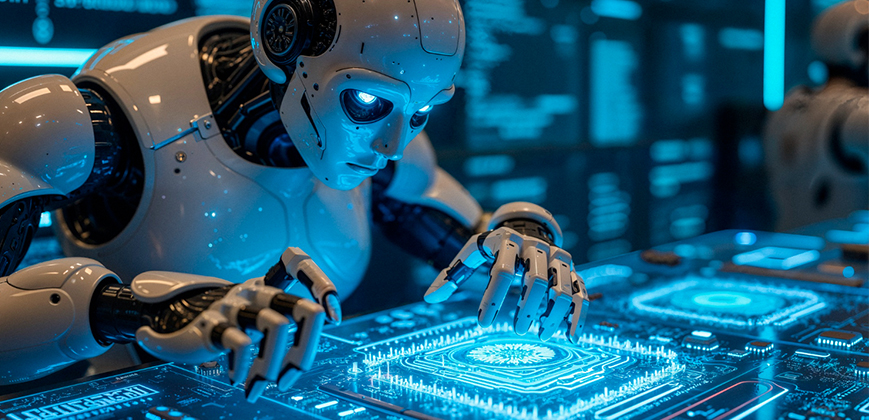
Welcome to the era of Physical AI (or Embodied AI). The convergence of advanced large language models (LLMs) with cutting-edge robotics is creating a new generation of machines capable of perceiving, reasoning, and acting in the physical world. From smart factory floors to our living rooms, here are the top trends driving the robotics revolution today.
The Humanoid Mainstream: From Prototypes to Production
Just a few years ago, general-purpose humanoid robots were viral novelties doing backflips on YouTube. Today, they are entering the workforce.
Companies like Tesla (Optimus), Boston Dynamics (Electric Atlas), Figure AI, and 1X are moving their humanoids out of the R&D labs and into real-world pilot programs. Why a human shape? Because our world—our stairs, doorways, factory aisles, and tools—was built for the human form. Instead of retrofitting a multi-million-dollar facility to accommodate wheeled robots, organizations are deploying humanoid robots that can seamlessly navigate "brownfield" environments (existing human-centric spaces) to perform complex, multi-step tasks.
Agentic AI: The Shift from "Automated" to "Autonomous"
Historically, industrial robots were incredibly fast and precise, but entirely "blind." If a part on an assembly line was shifted by two inches, the robot would grab empty air.
Enter Agentic AI. Today's robots don't just execute pre-programmed, rule-based loops; they possess autonomous reasoning. Powered by Vision-Language-Action (VLA) models, a robot can now look at a chaotic environment, understand what it is seeing, and dynamically adjust its movements. If an obstacle blocks its path, it computes a new route. If a machine malfunctions, an Agentic AI system can detect the anomaly, pause production, schedule a maintenance ticket, and reroute the workflow—all in real-time without human intervention.
The "Simulate-then-Procure" Economy
The era of buying expensive robotics hardware based on paper specs and hoping for the best is over. 2026 is dominated by the Digital Twin revolution
Before a physical robot is ever purchased or deployed, its exact environment is recreated in a high-fidelity digital simulation (using platforms like NVIDIA's Isaac Sim). The AI models are trained inside this virtual world for millions of simulated hours—learning how to walk, grasp objects, and avoid collisions. Once the virtual robot perfects the task, its "brain" is downloaded into the physical robot. The rule of modern robotics is simple: If it works perfectly in the simulation, it will work on the shop floor.
Cobots and RaaS: Democratizing Automation
Robotics used to be a luxury reserved for mega-corporations with massive capital expenditure budgets. Today, Robotics-as-a-Service (RaaS) has flipped the script.
Small and medium-sized businesses can now "hire" robots on a subscription basis. Alongside this financial shift is the maturation of Cobots (Collaborative Robots). Unlike the massive industrial arms of the past that had to be kept behind safety cages, today's cobots use advanced force sensors and AI vision to work safely shoulder-to-shoulder with humans. They are acting as workforce multipliers in commercial kitchens, local warehouses, and even healthcare facilities.
The Tactile Frontier: Solving the "Chopstick Problem"
While visual AI has made incredible leaps, the physical world requires more than just sight; it requires a delicate touch. The current frontier in robotics is mastering force sensing and tactile feedback.
Engineers are equipping robotic hands with high-frequency tactile sensor arrays that mimic human skin. This allows a machine to know exactly how much pressure to apply when picking up a fragile egg versus a heavy steel pipe. This mastery of fine manipulation is what will ultimately transition robots from heavy-lifting industrial tools into capable assistants in elderly care, surgery, and domestic chores.
The Verdict: A Collaborative Future
The rise of Physical AI naturally brings up concerns about workforce displacement. However, the data suggests a future of collaboration rather than pure replacement. In an era defined by global labor shortages and aging populations, AI-driven robots are stepping in to handle the dull, dirty, and dangerous jobs.
This isn't just an upgrade to a machine. It’s an entirely new chapter of human history. The screen has shattered, the algorithm has a body, and the true era of robotics has begun.